ॐ
SACRED TEMPLES
देवस्थानम् — Architectural Wonders of Sanatana Dharma
Hindu temples (*Mandir* or *Kovil*) are constructed according to Vastu Shastra and Agama Shastra as living models of the cosmos, housing the consecrated presence (*Murti*) of the Divine.
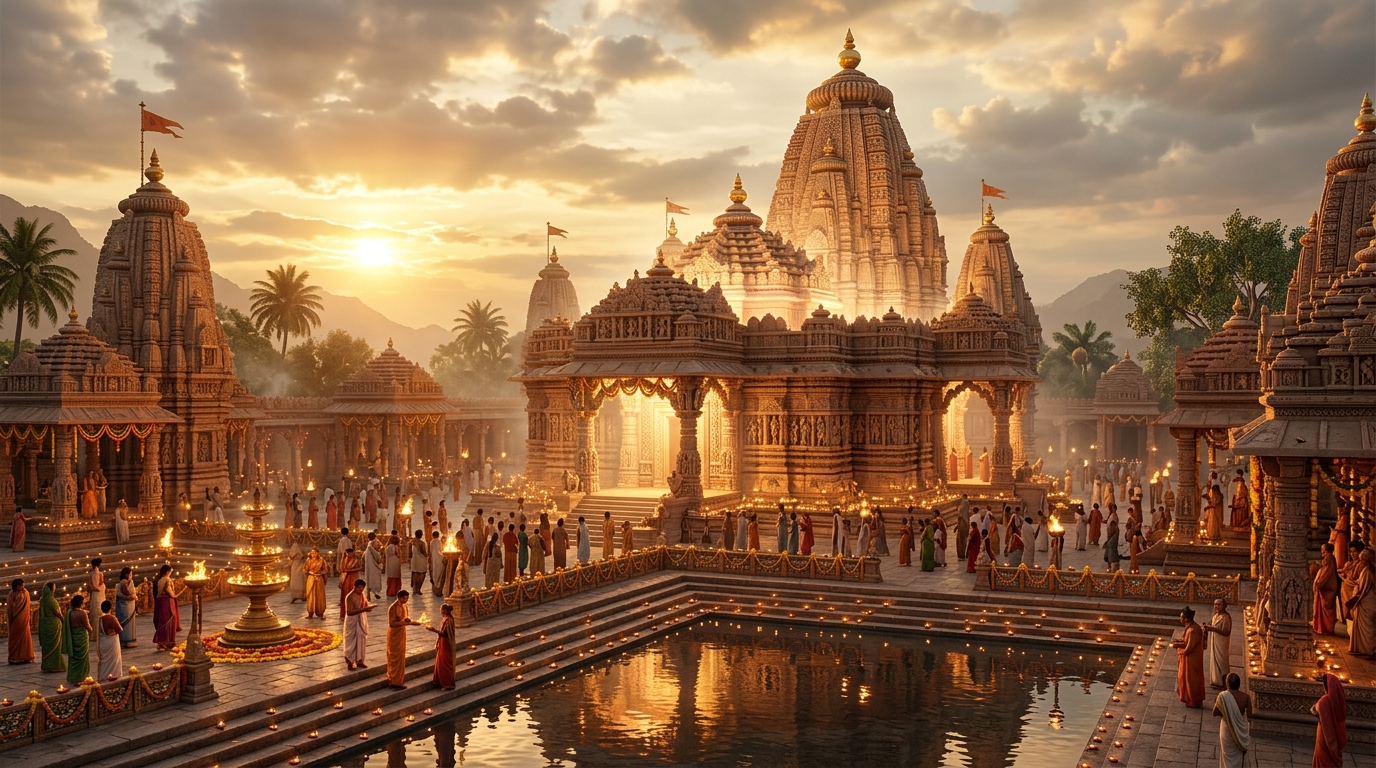
MONUMENTAL SACRED TEMPLES
महान्ति मन्दिराणि
Dravidian Architecture
Brihadeeswara Temple (बृहदीश्वर मन्दिर)
📍 Thanjavur, Tamil Nadu, India • Built 1010 CE
Dedicated to Lord Shiva as Rajarajesvaram. Built by Emperor Raja Raja Chola I out of solid granite. Features a 216-foot vimana tower capped by an 80-ton single stone dome.
Khmer Classical
Angkor Wat (अङ्कोर वाट)
📍 Siem Reap, Cambodia • Built 1150 CE
The largest religious monument in human history. Built by King Suryavarman II as a Hindu temple dedicated to Lord Vishnu, symbolizing Mount Meru, the home of the gods.
Dravidian Architecture
Meenakshi Amman Temple (मीनाक्षी मन्दिर)
📍 Madurai, Tamil Nadu, India
Dedicated to Goddess Meenakshi (Parvati) and Sundareswarar (Shiva). Renowned for its 14 towering gopurams decorated with thousands of brightly painted stone sculptures.
Jyotirlinga Shrine
Kashi Vishwanath Temple (काशी विश्वनाथ)
📍 Varanasi, Uttar Pradesh, India
One of the 12 sacred Jyotirlinga shrines of Lord Shiva, located on the western bank of the holy river Ganga in Varanasi — the oldest living city in the world.
Venkateswara Pilgrimage
Tirumala Venkateswara (तिरुमाला मन्दिर)
📍 Tirupati, Andhra Pradesh, India
Dedicated to Lord Venkateswara (Vishnu). Located on the Venkatadri hill of Seshachalam. The most visited and wealthiest Hindu pilgrimage center in the world.
Modern Craftsmanship
Swaminarayan Akshardham (अक्षरधाम)
📍 New Delhi, India & Robbinsville, NJ
Masterpieces of traditional pink sandstone and Italian marble carving constructed without steel, housing classical statues and celebrating Vedic culture.